
Sugar Free Pound Cake Recipe: Buttery, Tender, and Easy
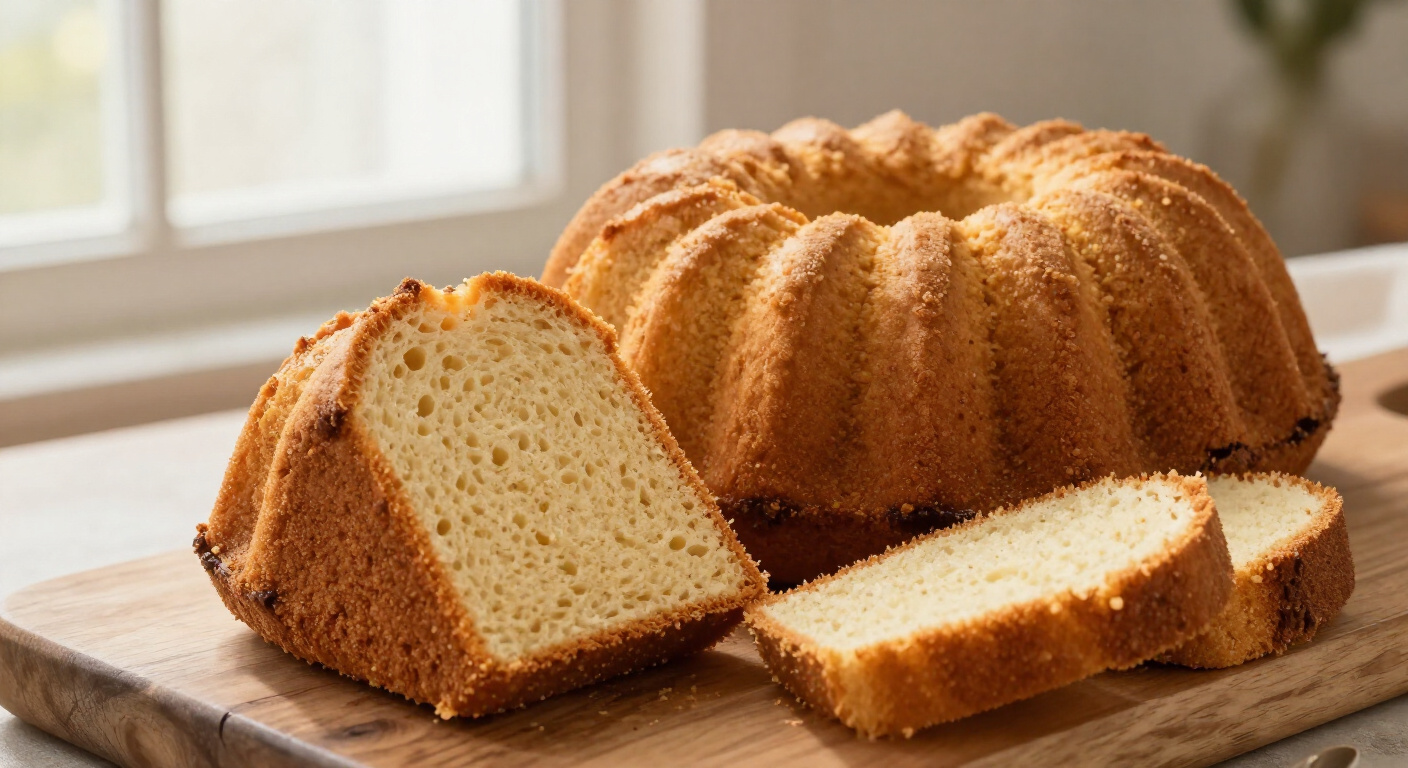
Sugar free pound cake recipe with a golden crust and velvety crumb, ready in 95 minutes. Slice it up for coffee time and taste the difference.
This sugar free pound cake recipe gives you a golden-brown crust and velvety crumb in about 95 minutes. It's a dense, easy everyday bake I pull out for slow coffee time.
Why This Recipe Works
• Cream butter and allulose until airy: Beating softened butter with the granules for 3-4 minutes whips tiny air pockets into the fat. Those bubbles expand in the oven and give the cake lift without relying on leavening alone.
• Room-temperature eggs go in one by one: Room-temperature eggs blend smoothly into the butter, forming a stable emulsion that holds air. Adding each egg fully before the next keeps the crumb fine and even.
• Sour cream adds moisture and gentle tang: Sour cream's acidity relaxes the flour's gluten, while its fat keeps every slice moist. Even after a few days on the counter, the crumb stays soft and tender.
• Fold flour in by hand: Stop folding the moment streaks disappear, since overworked flour turns tough and rubbery. Gentle strokes with a rubber spatula keep the texture tender from first slice to last.
Ingredients You'll Need
Unsalted Butter: This is the richness you taste in every slice, and it helps the crust turn golden-brown. Let it soften until it bends easily but doesn't look greasy. Best substitute: ghee, which keeps the buttery flavor and works the same way.
Granulated Allulose: This is the sweetener doing the job sugar usually does, so the cake tastes sweet with no sugar. It stays soft and tender after cooling, which is exactly what a pound cake needs. Best substitute: a 1:1 monk fruit and erythritol blend, though the sweetness may taste slightly different.
Large Eggs: Five eggs give this cake its structure and that rich, close-grained bite. Pull them out of the fridge ahead of time so they blend smoothly into the butter. Best substitute: pasteurized liquid whole eggs, measured to match the same amount.
All-Purpose Flour: This is the frame that holds the cake up, so measure it right. Spoon it into the cup and level it off, or the cake turns heavy. Best substitute: a 1:1 gluten-free all-purpose blend that already includes xanthan gum.
Baking Powder: It gives the dense batter just enough lift so it rises evenly in the pan. Mix it into the flour first so it spreads through every bite. Best substitute: ⅛ teaspoon baking soda plus ¼ teaspoon cream of tartar, whisked into the flour.
Fine Sea Salt: A tiny pinch that makes the butter and vanilla taste brighter. Without it, the cake can taste flat and one-note. Best substitute: fine table salt, using the same amount.
Sour Cream: I love how it adds fat and a gentle tang that balances the sweetness. It also keeps the cake from tasting too plain. Best substitute: full-fat Greek yogurt at room temperature, using the same amount.
Pure Vanilla Extract: This brings the warm, rounded background flavor that makes the kitchen smell like a bakery. Stir it in with the sour cream so it blends evenly. Best substitute: vanilla bean paste, same amount, for the same flavor with tiny flecks.


How to Make It (Step by Step)
It's one big bowl, one tube pan, and a low, slow bake until golden. Even if you've never baked a pound cake, you'll pull off a velvety, golden loaf.

- Preheat the oven on the middle rack until it feels steady and hot, 15-20 minutes at 325°F (163°C). Use this time to pull everything out.

- Grease a 10-inch tube pan with softened butter until every fluted crease looks evenly glossy, 2-3 minutes at 70°F (21°C). Don't skip the corners.

- Beat the softened butter and granulated allulose in a large bowl until pale, light, and fluffy, 3-4 minutes at medium speed, 70°F (21°C). Scrape the sides once so nothing hides at the bottom.

- Add the eggs one at a time, beating well after each, until the batter turns smooth and glossy, about 1 minute per egg at medium speed, 70°F (21°C). Take your time here.

- Stir in the sour cream and vanilla until silky and fully blended, 30-45 seconds at low speed, 70°F (21°C). The batter should look velvety and even.

- Whisk the flour, baking powder, and fine sea salt in a separate bowl until one even, fine powder forms, 30 seconds at 70°F (21°C). Keep it separate for now.

- Fold the dry mixture into the wet batter with a rubber spatula until no dry streaks remain, 1-2 minutes at 70°F (21°C). Stop as soon as it looks even.

- Spoon the batter into the greased tube pan and smooth the top until level, 1-2 minutes at 70°F (21°C). A level top bakes up evenly.

- Bake until deep golden-brown and a skewer inserted in the center comes out clean, 70-80 minutes at 325°F (163°C). The top should spring back lightly when touched.

- Invert the cake onto a wire rack until the pan lifts away cleanly, 15-20 minutes at 70°F (21°C). Let it cool fully before slicing.

Allulose browns faster than regular sugar, so keep an eye on the top. Around 60 minutes, tent it loosely with foil if it darkens too quickly.
Serving size: 1 portion · Calories: 310 · Total Fat: 17g · Saturated Fat: 10g · Carbs: 34g · Fiber: 1g · Sugar: 1g · Protein: 6g · Sodium: 190mg
Tips and Tricks
- Equipment: Reach for a 10-inch tube pan: The fluted center gives the batter a wide, even path to bake through. The middle cooks at the same pace as the edges.

- Temperature precision: Hold the oven at a steady 325°F (163°C): A few degrees too hot sets the crust before the center rises. That leaves a gummy middle, so let the oven fully preheat first.
- Common mistake: Scooping flour straight from the bag: Scooping packs in noticeably more flour than the recipe needs, which makes the cake dry and dense. Spoon it into the cup, then level it off with a knife.
- Flavour upgrade: Add a teaspoon of lemon zest: This is optional, but finely grated lemon zest beaten in with the vanilla brightens the butter flavour. It won't taste lemony, and it pairs beautifully with coffee.
- Texture tip: Slice with a thin serrated knife: Saw gently instead of pressing down, so the crumb stays tender and velvety. Wipe the blade between slices for clean, neat edges.

Frequently Asked Questions
Can I use erythritol or monk fruit instead of granulated allulose in this recipe?
Yes, swap the 1 ½ cups (300 g) allulose for an equal weight of a granular erythritol or monk fruit blend that measures cup-for-cup. Erythritol can leave a faint cooling aftertaste, so let the cake rest fully before slicing.
How long does sugar free pound cake keep in the fridge or freezer, and how do I reheat it?
Wrap leftover cake tightly and refrigerate for up to 5 days, or freeze slices for up to 3 months. Thaw at room temperature for 1 hour, or warm slices in a 300°F (150°C) oven for 8-10 minutes.
Why did my sugar free pound cake sink in the middle after baking?
The center was likely underbaked or the oven door was opened early. Keep the cake in until a skewer inserted in the center comes out clean, and avoid peeking before the 60-minute mark.
What to Serve With This
- Fresh Raspberries: Tart, juicy berries cut through the buttery richness and brighten every bite.
- Crisp Green Apple Slices: Their snappy crunch and sharp tang contrast beautifully with the soft, tender crumb.
- Orange Segments: Bright, acidic citrus wakes up your palate between bites of dense, golden cake.
- Plain Greek Yogurt: A cool, creamy spoonful adds tang and smoothness that balances the cake's velvety richness.

Sugar Free Pound Cake Recipe: Buttery, Tender, and Easy
Dessert / American
- Prep
- 20 min
- Cook
- 1 h 15 min
- Total
- 1 h 35 min
- Servings
- 12
- Calories
- 310 kcal
Ingredients
- 1 cup (226 g) unsalted butter, softened to room temperature
- 1 ½ cups (300 g) granulated allulose
- 5 large eggs, at room temperature
- 2 ½ cups (315 g) all-purpose flour, spooned and leveled
- ½ teaspoon baking powder
- ¼ teaspoon fine sea salt
- ½ cup (120 g) full-fat sour cream, at room temperature
- 2 teaspoons pure vanilla extract
Instructions
- Preheat the oven on the middle rack until it feels steady and hot, 15-20 minutes at 325°F (163°C). Use this time to pull everything out.
- Grease a 10-inch tube pan with softened butter until every fluted crease looks evenly glossy, 2-3 minutes at 70°F (21°C). Don't skip the corners.
- Beat the softened butter and granulated allulose in a large bowl until pale, light, and fluffy, 3-4 minutes at medium speed, 70°F (21°C). Scrape the sides once so nothing hides at the bottom.
- Add the eggs one at a time, beating well after each, until the batter turns smooth and glossy, about 1 minute per egg at medium speed, 70°F (21°C). Take your time here.
- Stir in the sour cream and vanilla until silky and fully blended, 30-45 seconds at low speed, 70°F (21°C). The batter should look velvety and even.
- Whisk the flour, baking powder, and fine sea salt in a separate bowl until one even, fine powder forms, 30 seconds at 70°F (21°C). Keep it separate for now.
- Fold the dry mixture into the wet batter with a rubber spatula until no dry streaks remain, 1-2 minutes at 70°F (21°C). Stop as soon as it looks even.
- Spoon the batter into the greased tube pan and smooth the top until level, 1-2 minutes at 70°F (21°C). A level top bakes up evenly.
- Bake until deep golden-brown and a skewer inserted in the center comes out clean, 70-80 minutes at 325°F (163°C). The top should spring back lightly when touched.
- Invert the cake onto a wire rack until the pan lifts away cleanly, 15-20 minutes at 70°F (21°C). Let it cool fully before slicing.
Share this article
About the author

Mateo Alvarez
Mateo was the kid who got picked last, and he carried that for years until he found the gym and, honestly, found himself. Sunday meal prep is the ritual that keeps him steady when everything else wobbles. He wants dessert too, because being disciplined should never mean being miserable.